
2026 Trends in Regenerative Medicine to Watch
Regenerative medicine has a simple premise: stop managing symptoms and start giving the body the specific tools it needs to repair itself at the cellular level. The science behind how to do that, however, keeps advancing.
At Meeting Point Health, most of what follows isn’t new to us. Our Philadelphia team has been integrating these treatments into patient care for years. What has changed in 2026 is that clinical research is catching up to what we see every day. Patients are arriving with sharper questions, and they deserve thorough answers.
Here are six areas trending in the field of regenerative medicine right now, what they actually mean for your health, and how we implement them at Meeting Point Health
1. Stem Cell & Exosome Therapy
Stem cell therapy isn’t a single treatment; it’s a category of precision biologics, and how we deliver them depends entirely on what we’re treating.
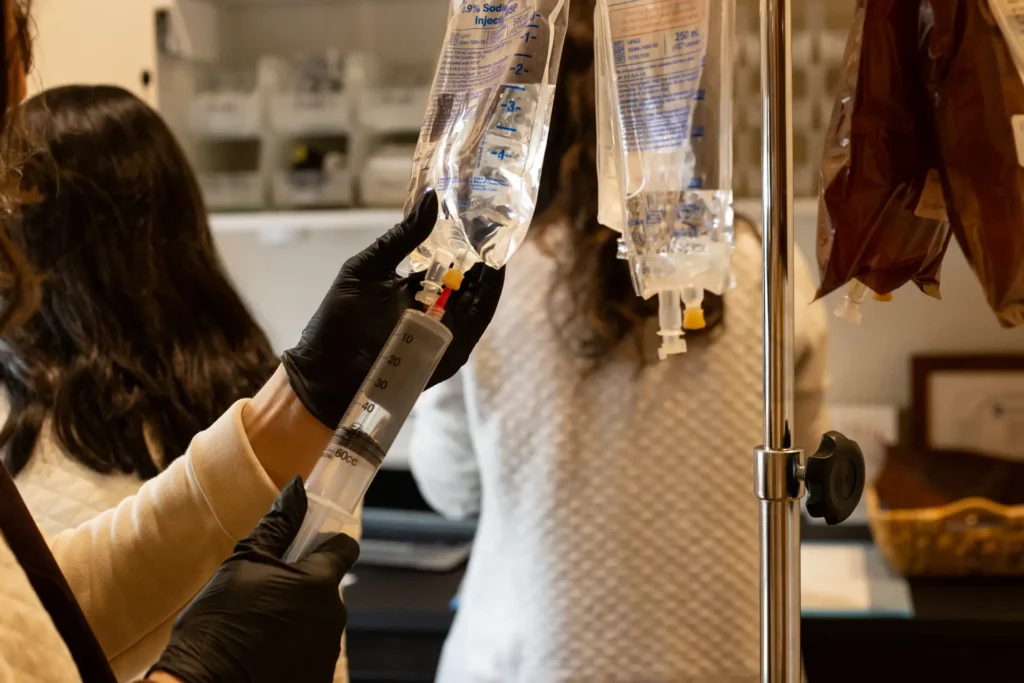
For localized injuries like joint degeneration or knee pain, we use ultrasound-guided injection to place stem cells directly at the site of damage. For systemic conditions such as chronic inflammation, autoimmune dysfunction, neurodegeneration, or widespread tissue decline, we deliver them intravenously, allowing the cells to circulate, home to areas of injury, and exert their effects systemically.
We primarily work with allogeneic stem cells ethically sourced from donors and derived from amniotic fluid, umbilical cord tissue, Wharton’s Jelly, and placental matrix. All of these are prepared under strict controlled conditions for therapeutic use. Exosomes, the signaling vesicles these cells produce, are often used alongside or independently to amplify the cellular communication cascade.
- How it works: Stem cells migrate directly to damaged tissue, promote targeted blood flow (angiogenesis), calm runaway inflammation, and prevent premature cell death.
- Delivery: Ultrasound-guided injections for targeted joint repair; IV infusions for systemic/autoimmune conditions.
- Common uses: Osteoarthritis, joint degeneration, sports injuries, autoimmune conditions, and neurodegeneration.
2. Mitochondrial Peptides: MOTS-c, Epitalon & 5-Amino-1MQ
Regenerative medicine has historically focused on structural repair of tendons, joints, and tissue. But increasingly, the field is recognizing that cellular energy production is just as foundational. When mitochondria aren’t functioning well, everything downstream is more likely to suffer: energy, metabolism, cognitive clarity, and the rate at which you age.
Mitochondrial peptides are short amino acid chains that modulate how your cells produce and manage energy. We use several in clinical practice, each with a distinct mechanism:
- MOTS-c: Acts as a metabolic regulator, improving how cells process fat for fuel, enhancing insulin sensitivity, and replicating some of the cellular adaptations triggered by sustained exercise
- Epitalon: Supports telomere integrity and cellular longevity markers, while also helping normalize disrupted circadian rhythms and sleep architecture – a common casualty of chronic illness
- 5-Amino-1MQ: Inhibits an enzyme called NNMT that otherwise promotes metabolic slowdown in fat tissue, effectively prompting adipocytes to actively burn rather than store energy
According to this study found in PubMed, here are some common indications for mitochondrial peptides:
- Chronic fatigue unresponsive to rest
- Persistent brain fog
- Metabolic resistance and stubborn weight
- Age-related decline in energy and vitality
- Immune/inflammatory responses
- Patients seeking increased exercise performance
3. Tissue Repair Peptides: BPC-157 & Thymosin Beta-4
Where mitochondrial peptides work at the energy level, tissue repair peptides work at the site of physical damage. By delivering targeted signals directly to injured or inflamed tissue, they can meaningfully shorten the time it takes to recover, whether from an acute injury, surgery, or chronic gut dysfunction.
The two tissue repair peptides we prescribe most frequently at Meeting Point Health include:
- BPC-157: A body-protective compound that accelerates repair in tendons, ligaments, and skeletal structures, while also healing the endothelial lining of the GI tract.
- TB-4 (Thymosin Beta-4): Promotes angiogenesis (new blood vessel formation), supports immune regulation, and accelerates deep muscle and wound healing. Also may be used in hair loss protocols where poor scalp circulation is a contributing factor.
Common indications for BPC-157 and TB-4:
- Acute sports injuries, ligament and tendon tears
- Pre- and post-surgical recovery
- Leaky gut, IBS, and chronic GI cramping
- Hair loss with vascular or inflammatory drivers
4. Stellate Ganglion Block (SGB): Resetting an Overloaded Nervous System
A body locked in chronic survival mode cannot heal. Severe stress, trauma, persistent pain, and post-viral syndromes can drive the sympathetic nervous system into a sustained state of activation – one that doesn’t resolve on its own even when the original trigger is gone. SGB directly interrupts that loop.
The procedure involves a precise injection of local anesthetic into the stellate ganglion, a cluster of sympathetic nerve tissue in the neck. By temporarily blocking its activity, SGB allows the nervous system to drop out of fight-or-flight and return to a parasympathetic baseline. This acts as a physiological reset that lowers the chronic activation threshold the body has been defending.
What this makes possible:
- Reduced sympathetic hyperactivation driving anxiety, insomnia, and palpitations
- A lower physiological “panic baseline” from which other therapies can actually take hold
- Improved autonomic regulation in patients where dysautonomia is part of the picture
Common indications for SGB:
- Long COVID symptoms (persistent brain fog, fatigue, palpitations)
- PTSD and severe anxiety
- Chronic pain feedback loops

5. EBOO Advanced Ozone Therapy: Systemic Detox & Oxygenation
Ozone therapy has been used in clinical medicine for decades, but the way we apply it today is meaningfully different from its earlier forms.
EBOO (Extracorporeal Blood Oxygenation and Ozonation) processes blood continuously outside the body rather than treating a small, fixed volume at once. In a single session, roughly two liters of blood pass through a specialized filter, are exposed to a precise concentration of medical-grade ozone and oxygen, then move under ultraviolet light before returning to circulation, all through a simultaneous draw-and-return loop that older methods couldn’t replicate.
What’s actually happening in your blood with EBOO:
- Ozone creates a brief, controlled oxidative signal that prompts your immune system and mitochondria to upregulate their own antioxidant defenses
- Red blood cells become more flexible, allowing oxygen to reach compromised or poorly-perfused tissue
- Circulating inflammatory markers drop as the chronic microbial burden driving them is reduced
- UV exposure neutralizes pathogens directly in the extracorporeal circuit before blood returns to your body
Who we typically treat with EBOO:
- Chronic Lyme disease and co-infections
- Mold toxicity and mycotoxin burden
- Post-viral fatigue and Long COVID
- Longevity patients looking to improve overall health
- Autoimmune conditions with a significant infectious or inflammatory component
- Systemic inflammation that hasn’t responded well to conventional approaches alone

6. Electro-Acupuncture for Chronic Pain & Nerve Dysfunction
Chronic pain and movement dysfunction often aren’t just structural problems; they’re communication failures between the nervous system and the muscles it’s supposed to coordinate. Electro-acupuncture addresses that directly.
The approach combines traditional acupuncture needle placement with frequency-specific electrical stimulation to interface with peripheral and central nervous system pathways.
How electro-acupuncture works:
- Electrical current through the needles activates motor and sensory nerve pathways, forcing dormant or inhibited muscles to fire correctly
- Stimulation prompts endogenous release of endorphins and serotonin, reducing pain signaling at the central level rather than just locally
- Localized sympathetic activity is down-regulated, improving blood flow and reducing the neurogenic inflammation that perpetuates chronic pain cycles
Common indications for electro-acupuncture:
- Chronic neck, back, and joint pain
- Muscle weakness, atrophy, or spasm
- Neuropathic numbness and tingling
Designing Your Protocol
What defines regenerative medicine in 2026 isn’t any single technology. It’s the shift toward treating each patient as a specific biological system rather than a set of symptoms to manage.
No two people carry the same infectious history, structural load, hormonal environment, or cellular baseline. That’s why protocols built from a template rarely produce durable results. At Meeting Point Health in Philadelphia, PA, we evaluate the full picture before recommending any combination of therapies, and we adjust as the picture changes.
If you’re ready to move past symptom management and understand what’s actually driving your health challenges, we’d welcome the conversation.
Schedule your discovery call with Meeting Point Health.
Helpful Links:
- Regenerative Orthopedic Care
- Stem Cell Therapy
- Peptide Therapy
- Stellate Ganglion Block Services
- EBOO Therapy
- Acupuncture
- About Us
Related Reading:
- Can Regenerative Medicine Replace Surgery? Breaking Down The Benefits
- Orthobiologics Explained: What They Are and How They’re Changing Sports Medicine
- Beyond the Hype: Is Peptide Therapy Right for You?
- Mechanisms of Action of Acupuncture and How it Works in Healing
Written by Amanda Bates, RN and medically reviewed by Dr. Stephen Matta.


