
Beyond the Hype: Is Peptide Therapy Right for You?
Peptide Therapy has emerged as a powerhouse in integrative and regenerative medicine, with applications ranging from metabolic support to tissue repair and cellular optimization. However, social media often portrays peptides as a “quick fix” for weight loss, anti-aging or performance enhancement. At Meeting Point Health, our approach prioritizes evidence-based application, emphasizing the role of peptides as precise signaling molecules that support the body’s endogenous repair and regulatory pathways.
In this guide, we address five common misconceptions around peptide therapy and answer your most frequent questions.
Can Peptide Therapy Be Used as a Standalone Weight Loss Solution?
While popular peptides like Semaglutide and Tirzepatide are breakthroughs in metabolic health, they aren’t just passive weight loss agents. They work by improving insulin sensitivity and reducing inflammation, thereby restoring metabolic flexibility.
- The Reality: Peptides work best when added to a solid foundation of balanced nutrition and physical activity. Glucagon-Like Peptide (GLP) receptor agonists do not replace training or proper nutrition; they amplify them.
- The Benefit: Beyond weight loss, these peptides can improve cholesterol, protect the kidneys, and support brain health.
Scientific Understanding: They function as signaling molecules that modulate pathways such as lipolysis and insulin sensitivity. Additional options, such as AOD-9604 (a fragment explored for lipolytic effects in preclinical models) and related dietary peptides, may complement these efforts under medical supervision.
Is Peptide Therapy Only for Professional Athletes and Bodybuilders?
Although certain peptides (e.g., BPC-157 for tissue repair or CJC-1295 for growth hormone axis modulation) gain attention in athletic contexts, their use cases extend to broader regenerative applications. Preclinical and observational data suggest utility beyond what you may have heard:
- Supporting recovery from surgical interventions
- Repairing and protecting the gut lining (BPC-157)
- Mitigating chronic joint inflammation
- Alleviating cognitive symptoms associated with systemic stress
- Promoting overall cellular resilience
Is it Safe to “Stack” or Combine Different Types of Peptides?
Peptides exhibit high specificity in receptor interactions and downstream signaling. Decreased efficacy or unintended pathway interference can happen when combining multiple agents without an individualized assessment.
Meeting Point Health adheres to a principle of bio-individuality. Through functional laboratory evaluation and comprehensive consultation, we identify disruptions in cellular signaling and prescribe targeted peptides at precise dosages aligned with the patient’s unique physiology.
Are Online “Research-Grade” Peptides Safe to Use?
This is a critical safety concern. Products labeled for “research use only” are not subject to the same regulatory standards as those from accredited compounding pharmacies. Unregulated sources may contain:
- Impurities or contaminants.
- Inconsistent potency.
- Structural deviations that compromise safety and bioactivity.
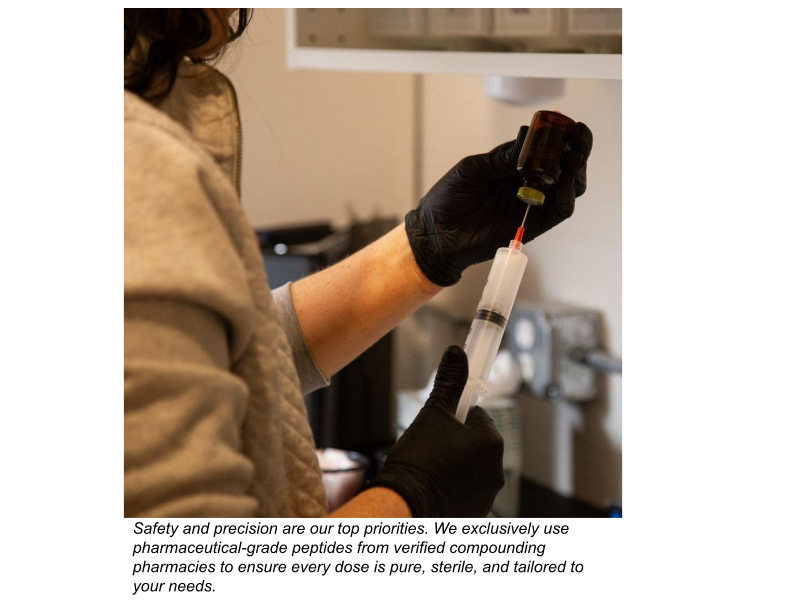
We exclusively source from verified, third-party-tested compounding pharmacies compliant with The United States Pharmacopeia (USP) guidelines and rigorous quality assurance. This helps to ensure pharmaceutical-grade purity, sterility, and traceability, which are critical when modulating cellular signaling pathways.
Are Peptides Synthetic Drugs or “Natural” Substances?
Therapeutic peptides are bio-identical analogs of short amino acid chains your cells naturally use to communicate. Synthesized under controlled laboratory conditions for precision and stability, they replicate sequences naturally encoded in human physiology rather than introducing exogenous “drugs” in the conventional pharmacological sense.
In clinical practice, we regard peptide therapy as a restorative intervention: it helps to restore signaling that has diminished due to aging, stress, or injury.
Why Choose Meeting Point Health for Peptide Therapy in Philadelphia?
Our protocols focus on longevity and restorative function, tailoring interventions to individual needs rather than performance metrics alone. Peptide therapy represents a sophisticated modality in regenerative medicine, leveraging targeted signaling to support healing, metabolic balance, and optimal functioning. Far from a trend-driven intervention, it requires rigorous clinical oversight, individualized protocols, and integration with foundational lifestyle factors.
At Meeting Point Health, Dr. Stephen Matta and Mary Anne Matta view each patient as a dynamic biological system deserving of precision care. If you are exploring peptide therapy to address metabolic, inflammatory, or restorative concerns, we invite you to schedule a comprehensive consultation to determine suitability and design a tailored plan.

Frequently Asked Questions About Peptide Therapy
- How frequently will I need to administer peptide therapy? Depending on the route of administration and your wellness goals, peptide therapy could be administered on a daily or weekly basis for 3 months or longer.
- What is the primary goal of peptide therapy? The goal of Peptide Therapy, whether for metabolic health, tissue repair, or cognition, is to replenish signaling molecules your body isn’t producing enough of.
- What other peptides does Meeting Point Health prescribe? A cohesive list of the different peptides we currently use and their indications can be found here.
- How effective is peptide therapy? Peptide therapies vary in effectiveness based on the individual treatment being used and what it is aiming to treat. Overall, peptide therapy has proven to be a very safe and effective form of treatment.
- How quick will I see results from peptide therapy? It varies. Some may experience the benefits of their treatment very shortly and some may take weeks or months of treatment to experience the full effects of the treatment and an overall improved quality of life.
References:
- Ng, F., Jiang, W., Gianello, R., Pitt, S., & Roupas, P. (2000). Molecular and cellular actions of a structural domain of human growth hormone (AOD9401) on lipid metabolism in Zucker fatty rats.. Journal of molecular endocrinology, 25 3, 287-98 . https://doi.org/10.1677/jme.0.0250287.
- Liu, Q. (2024). Mechanisms of action and therapeutic applications of GLP-1 and dual GIP/GLP-1 receptor agonists. Frontiers in Endocrinology, 15. https://doi.org/10.3389/fendo.2024.1431292.
- Sikiric, P., Seiwerth, S., Škrtić, A., Starešinić, M., Štrbe, S., Vuksic, A., Sikirić, S., Bekic, D., Soldo, D., Grizelj, B., Novosel, L., Orešković, B., Orešković, I., Stupnišek, M., Blagaić, B., & Dobrić, I. (2025). Stable Gastric Pentadecapeptide BPC 157 as a Therapy and Safety Key: A Special Beneficial Pleiotropic Effect Controlling and Modulating Angiogenesis and the NO-System. Pharmaceuticals, 18. https://doi.org/10.3390/ph18060928.
Written by Amanda Bates, RN and medically reviewed by Dr. Stephen Matta.


